

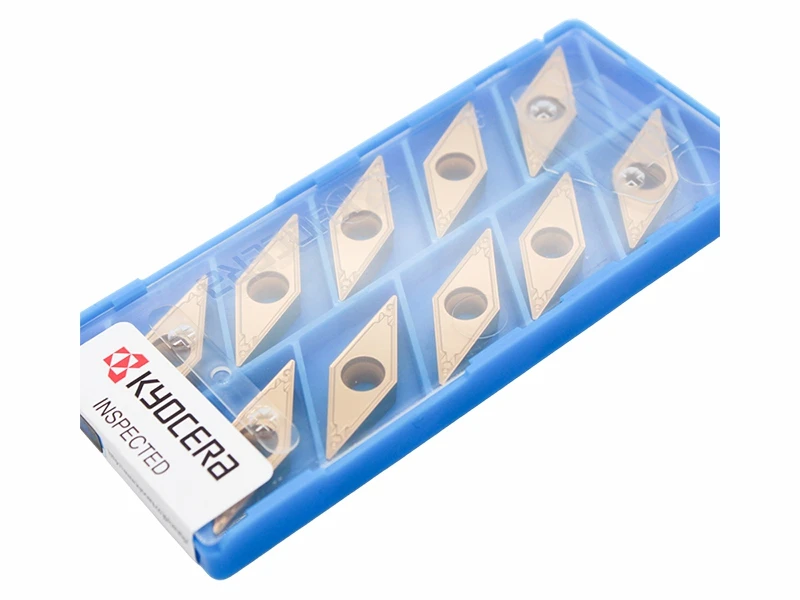


Flat turning tools, also referred to as turning inserts or lathe tools for flat surfaces, play a crucial role in both CNC machining and manual lathe operations. These tools are specifically designed to remove material from the flat surfaces of workpieces, ensuring precise dimensions, refined surface finishes, and accurate shapes.
Advantages
- Precision Machining: Capable of achieving tight tolerances and smooth surface finishes on flat surfaces of various materials.
- Versatility: Suitable for turning operations on metals, plastics, composites, and other engineering materials.
- Efficiency: Optimized cutting geometries and insert designs enable higher cutting speeds and feeds, thereby enhancing overall machining productivity.
- Tool Longevity: Constructed with durable materials and advanced coatings to extend tool life and reduce long-term tooling costs.
- Ease of Use: Compatible with a wide range of CNC machines and manual lathes, offering flexibility in manufacturing processes.
Applications
Flat turning tools find extensive application in various industries and environments:
- General Engineering: Used across a wide spectrum of engineering applications to machine flat surfaces on components such as shafts, plates, and blocks.
- Automotive Industry: Essential for manufacturing precise flat surfaces on automotive parts like gears, brake discs, and engine components.
- Aerospace Industry: Applied in aerospace machining for producing critical components such as landing gear parts and structural elements.
- Prototyping and Production: Suitable for both prototyping and high-volume production environments where consistent and accurate flat surfaces are essential.
FAQ
Q: What are the common types of inserts used in flat turning tools?
Q: Can flat turning tools perform both roughing and finishing operations?
Q: How should I select the appropriate flat turning tool for my application?
Q: What strategies can I use to prolong the lifespan of flat turning tools?
Q: Are there specific considerations for machining different materials with flat turning tools?
Hot Tags: flat turning tools, China flat turning tools manufacturers, suppliers, cnc tool workshop, cnc polishing tools, cnc tool innovation, cnc tool retailer, cnc tool installation, cnc broaches


