

What is the rigidity requirement for a worm milling machine?
As a dedicated supplier of Worm Milling Machines, I've witnessed firsthand the pivotal role that rigidity plays in the performance and efficiency of these complex pieces of machinery. The concept of rigidity, in the context of a worm milling machine, encompasses various aspects that are essential for achieving high - quality results in worm manufacturing.
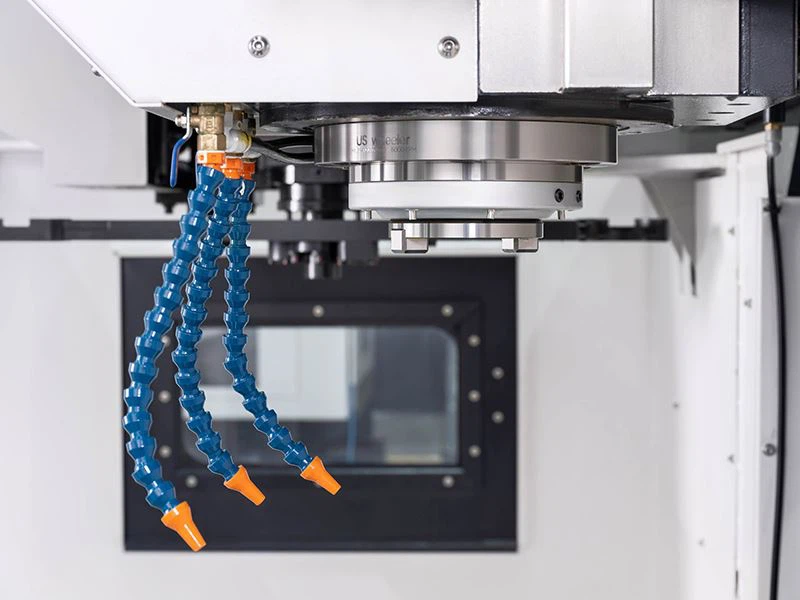

Rigidity in a worm milling machine can be divided into structural rigidity and dynamic rigidity. Structural rigidity refers to the machine's ability to withstand static forces without significant deformation. This is crucial because the worm milling process involves substantial cutting forces, and any deformation of the machine structure can lead to inaccurate milling, reduced surface finish quality, and premature tool wear.
The frame of the worm milling machine is the backbone of its structural rigidity. A well - designed and properly constructed frame ensures that the various components of the machine, such as the spindle, the table, and the tool - holding device, are held in precise alignment. For example, a machine with a heavy - duty cast - iron frame is less likely to flex under load compared to one with a lighter or poorly constructed frame. Cast - iron has excellent damping properties, which help to absorb vibrations generated during the milling process, further enhancing structural stability.
The spindle is another critical component where rigidity is of utmost importance. The spindle rotates the cutting tool at high speeds, and any misalignment or lack of rigidity can cause uneven cutting forces, resulting in poor worm thread quality. High - grade bearings are used in the spindle assembly to provide precise support and minimize deflection. Additionally, the spindle's diameter and length also affect its rigidity. A larger - diameter spindle is generally more rigid than a smaller one, as it can resist bending forces more effectively.
Dynamic rigidity, on the other hand, deals with the machine's ability to respond to dynamic forces, such as vibrations and shock loads, during the milling process. Worm milling is a continuous and often high - speed operation, which generates significant vibrations. These vibrations can not only degrade the quality of the machined worm but also cause excessive wear on the machine components.
To enhance dynamic rigidity, many modern worm milling machines are equipped with vibration - damping mechanisms. One common approach is the use of viscoelastic materials in the machine's structure. These materials can absorb and dissipate energy, reducing the amplitude of vibrations. Another technique is the use of counterweights and balancing systems. By carefully balancing the rotating components of the machine, such as the spindle and the cutting tool, the unbalanced forces that cause vibrations can be minimized.
The tool - holding system also contributes to both structural and dynamic rigidity. A secure and rigid tool - holder is essential for precise cutting. If the tool is not held firmly in place, it can move or chatter during the milling process, leading to irregularities in the worm thread. Modern tool - holding systems are designed to provide high clamping forces while also allowing for quick and easy tool changes.
In addition to the internal components of the worm milling machine, the overall layout and design of the machine also impact its rigidity. Well - spaced and properly supported guideways for the table movement ensure smooth and stable operation. The positioning of the motors, drives, and other auxiliary components should be carefully considered to minimize any negative effects on the machine's rigidity.
When comparing different worm milling machines, it's important to evaluate their rigidity through various measures. One way is to look at the machine's specifications, such as the spindle power, the table load capacity, and the static and dynamic stiffness values. These parameters can give you a good indication of the machine's ability to handle cutting forces and vibrations.
Another practical method is to conduct a trial run on the machine. Observe the machine during operation, paying attention to factors such as noise levels, vibration amplitude, and the quality of the machined worm. If the machine produces excessive noise or vibrations, or if the worm has visible surface defects, it may indicate a lack of rigidity.
As a supplier of Ram Type Milling Machine and Mill - Turn Machining Centres in addition to Worm Milling Machines, we understand that the right level of rigidity is crucial for different applications. For example, in high - precision worm manufacturing, where tight tolerances and excellent surface finishes are required, a machine with high rigidity is essential. On the other hand, for less demanding applications, a machine with a more moderate level of rigidity may be sufficient.
We also recognize that the rigidity requirements can vary depending on the type of material being milled. Harder materials, such as hardened steel or titanium, require a more rigid machine to handle the increased cutting forces. Softer materials, like aluminum or brass, may allow for a slightly less rigid setup.
In conclusion, the rigidity of a worm milling machine is a multi - faceted concept that encompasses both structural and dynamic aspects. A machine with high rigidity can produce high - quality worms with precise dimensions and excellent surface finishes, while also reducing tool wear and increasing the overall lifespan of the machine.
If you are in the market for a Worm Milling Machine, we invite you to contact us. Our team of experts is ready to discuss your specific requirements and help you find the ideal machine that meets your needs. Whether you are a small - scale workshop or a large - scale manufacturing facility, we have the knowledge and experience to assist you in making the right choice.
References
- Manufacturing Technology Handbook, Edition 3.
- Precision Machine Design Principles, 2nd Edition.
- Worm Gear Manufacturing - A Technical Guide.