

Hey there! As a supplier of CBN Tools, I've been getting a lot of questions lately about how the CBN content in these tools affects their performance. So, I thought I'd take a deep dive into this topic and share some insights with you all.
First off, let's quickly understand what CBN is. CBN stands for Cubic Boron Nitride. It's an extremely hard material, second only to diamond in hardness. CBN tools are widely used in machining, especially for hard materials like hardened steels, cast irons, and superalloys.
The CBN content in CBN tools can vary quite a bit, usually ranging from around 30% to 90%. And this variation has a huge impact on the tool's performance in several ways.
Cutting Performance
One of the most obvious effects of CBN content is on the cutting performance. Higher CBN content generally means better cutting performance. Tools with a high CBN content, say 80% - 90%, are really great at high - speed machining. They can cut through hard materials quickly and smoothly, with less cutting force required. This is because the high concentration of CBN particles provides more cutting edges, allowing for more efficient material removal.
For example, when machining hardened steels, a CBN tool with a high CBN content can maintain a sharp cutting edge for a longer time. It can cut at higher speeds without getting worn out too quickly. This results in shorter machining times and higher productivity. On the other hand, tools with lower CBN content, around 30% - 50%, are better suited for more interrupted cutting operations. They are a bit more forgiving and can handle the shock of interrupted cuts better than high - CBN - content tools.
Wear Resistance
Wear resistance is another crucial aspect affected by CBN content. High - CBN - content tools have excellent wear resistance. The large number of CBN particles in these tools can withstand the abrasive forces generated during machining. This means that they can be used for a longer period before they need to be replaced.
In applications where you're machining hard and abrasive materials, like some types of cast irons, a high - CBN - content tool can save you a lot of money in the long run. You won't have to keep replacing the tools as often, which reduces downtime and tooling costs. However, lower - CBN - content tools may wear out faster, but they are also generally less expensive. So, if you're on a tight budget or have less demanding machining jobs, they can still be a viable option.
Thermal Stability
CBN tools need to be able to handle high temperatures generated during machining. High - CBN - content tools have better thermal stability. The CBN particles can dissipate heat effectively, preventing the tool from overheating. This is important because overheating can cause the tool to lose its hardness and wear out more quickly.
When you're doing high - speed machining, the heat generated can be quite intense. A high - CBN - content tool can maintain its performance even under these high - temperature conditions. Lower - CBN - content tools may not be as good at handling heat, so they might be more suitable for lower - speed machining operations where the heat generation is less of a concern.
Cost - effectiveness
Cost is always a factor in any manufacturing process. High - CBN - content tools are usually more expensive than their lower - content counterparts. But as we've seen, they offer better performance in terms of cutting speed, wear resistance, and thermal stability. So, the decision on which CBN content to choose depends on your specific machining requirements and budget.

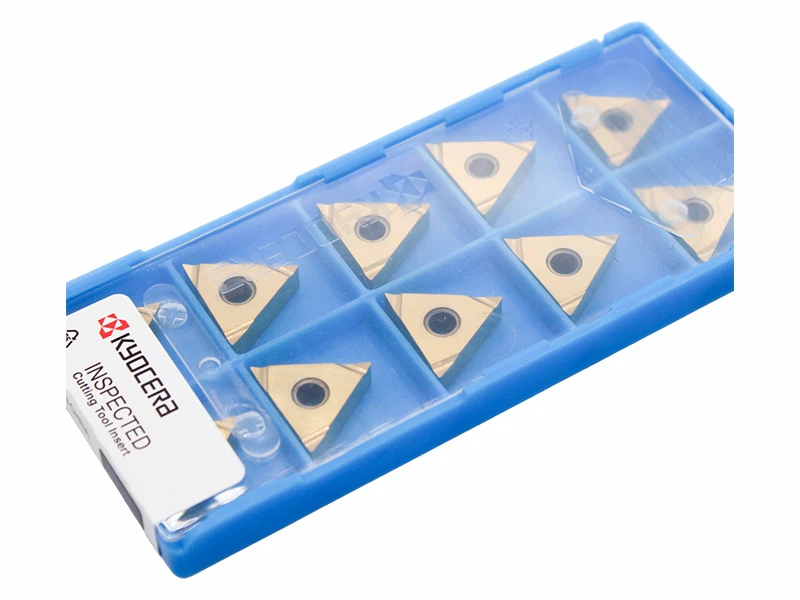
If you're running a high - volume production line where productivity is key, investing in high - CBN - content tools might be worth it. The increased efficiency and longer tool life can offset the higher initial cost. But if you're a small - scale manufacturer or have intermittent machining jobs, lower - CBN - content tools can provide a more cost - effective solution.
Applications and CBN Content
Let's take a look at some specific applications and how the CBN content matters.
Thread Turning
Thread Turning Tools often require a good balance of cutting performance and wear resistance. For precision thread turning on hard materials, a CBN tool with a medium to high CBN content (around 60% - 80%) is usually a good choice. It can cut accurate threads quickly and maintain the thread profile over a long period of use.
Internal Turning
Internal Turning Tools are used for machining the inside of holes. When machining hard materials internally, a high - CBN - content tool can be very beneficial. It can reach high speeds and remove material efficiently, even in confined spaces. However, if the internal turning operation involves interrupted cuts, a tool with a lower CBN content might be more appropriate to handle the shock.
Comparison with PCD Tools
It's also worth comparing CBN tools with PCD Tools. PCD (Polycrystalline Diamond) tools are extremely hard and are great for machining non - ferrous materials like aluminum and copper. But they are not suitable for machining ferrous materials because diamond reacts with iron at high temperatures.
CBN tools, on the other hand, are specifically designed for machining ferrous materials. The CBN content in CBN tools allows them to perform well in these applications where PCD tools would fail. So, depending on the material you're machining, you need to choose between CBN and PCD tools, and within the CBN tools, the right CBN content.
Conclusion
In conclusion, the CBN content in CBN tools has a significant impact on their performance. Higher CBN content generally offers better cutting performance, wear resistance, and thermal stability, but it also comes at a higher cost. Lower CBN content tools are more forgiving in interrupted cutting operations and are more budget - friendly.
As a supplier of CBN tools, I can help you choose the right CBN content for your specific machining needs. Whether you're looking for high - performance tools for large - scale production or cost - effective solutions for small - scale jobs, I've got you covered. If you're interested in learning more about our CBN tools or want to discuss your machining requirements, feel free to reach out. We can have a detailed chat about how to optimize your machining process with the right CBN tools.
References
- "Cutting Tool Materials and Applications" by Stephenson and Agapiou
- "Machining of Metals: An Introduction to the Mechanics and Processes of Cutting" by Trent and Wright