

What are the vibration characteristics of CBN Tools during machining?
In the field of modern machining, Cubic Boron Nitride (CBN) tools have gained significant popularity due to their exceptional hardness, high thermal stability, and excellent wear resistance. As a leading CBN tools supplier, I have witnessed firsthand the remarkable performance of these tools in various machining applications. However, like any cutting tool, CBN tools are not immune to vibrations during the machining process. Understanding the vibration characteristics of CBN tools is crucial for optimizing machining operations, improving surface quality, and extending tool life.
Types of Vibrations in Machining
Vibrations in machining can be broadly classified into three main types: forced vibrations, self - excited vibrations (chatter), and free vibrations.
Forced vibrations are caused by external periodic forces in the machining system. These forces can originate from factors such as unbalanced rotating components in the machine tool, irregularities in the workpiece material, or the intermittent cutting action. For example, if the spindle of the machine tool has an unbalanced mass, it will generate a centrifugal force that varies periodically with the rotational speed, causing the tool to vibrate.
Self - excited vibrations, commonly known as chatter, are the most detrimental type of vibrations in machining. Chatter occurs when the cutting process becomes unstable, and the tool and the workpiece interact in a way that amplifies the vibrations. This can lead to poor surface finish, reduced dimensional accuracy, and accelerated tool wear. The mechanism of chatter is complex and is influenced by factors such as the cutting parameters, tool geometry, and the dynamic properties of the machining system.
Free vibrations are transient vibrations that occur when the system is suddenly disturbed. For instance, when a cutting tool starts or stops cutting, there may be a brief period of free vibrations as the system adjusts to the new state.
Vibration Characteristics of CBN Tools
CBN tools have unique vibration characteristics compared to other types of cutting tools, mainly due to their high hardness and stiffness.
High - Frequency Vibration Resistance
One of the advantages of CBN tools is their ability to resist high - frequency vibrations. The high hardness of CBN allows the tool to maintain its cutting edge integrity even under high - frequency excitation. This is particularly important in high - speed machining operations, where the cutting speed can generate high - frequency vibrations. For example, in high - speed milling of hardened steels, CBN end mills can effectively withstand the high - frequency vibrations associated with the rapid cutting action, resulting in a more stable cutting process and better surface finish.
Reduced Chatter Tendency
CBN tools generally have a reduced tendency to chatter compared to traditional carbide tools. The high stiffness of CBN tools helps to dampen the vibrations and prevent the self - excitation mechanism that leads to chatter. In turning operations, for example, CBN inserts can provide a more stable cutting process, especially when machining difficult - to - cut materials such as nickel - based alloys. The reduced chatter not only improves the surface quality of the workpiece but also extends the tool life by reducing the impact forces on the cutting edge.

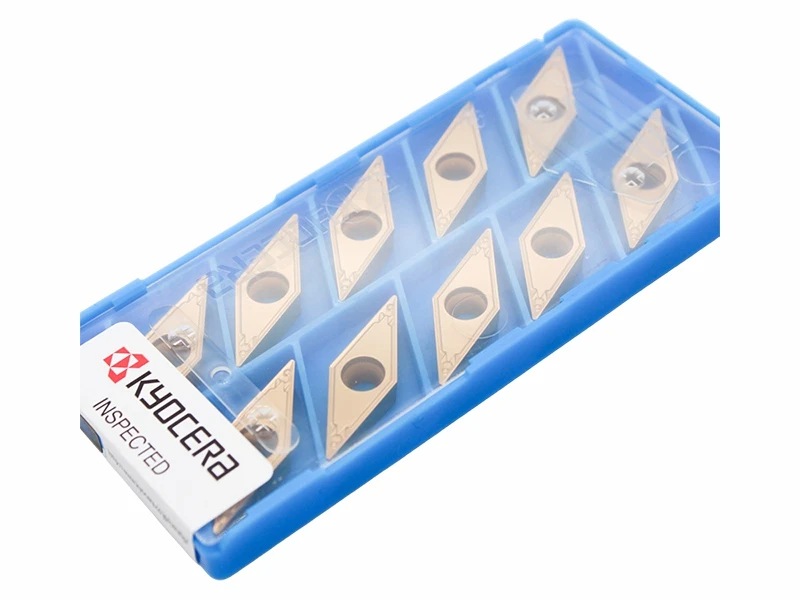
Influence of Tool Geometry
The geometry of CBN tools also plays a significant role in their vibration characteristics. For example, the rake angle, clearance angle, and cutting edge radius can affect the cutting forces and the stability of the cutting process. A proper selection of tool geometry can help to minimize the vibrations and improve the overall performance of CBN tools. In face milling operations, Face Milling CNC Tools with optimized geometry can distribute the cutting forces more evenly, reducing the likelihood of vibrations and chatter.
Factors Affecting the Vibration of CBN Tools
Several factors can affect the vibration characteristics of CBN tools during machining.
Cutting Parameters
Cutting parameters such as cutting speed, feed rate, and depth of cut have a direct impact on the cutting forces and the stability of the cutting process. Increasing the cutting speed generally reduces the cutting forces but may also increase the tendency for high - frequency vibrations. On the other hand, increasing the feed rate and depth of cut can increase the cutting forces, which may lead to chatter if the machining system is not rigid enough. Therefore, it is essential to optimize the cutting parameters to minimize the vibrations and achieve the best machining results.
Workpiece Material
The properties of the workpiece material, such as hardness, toughness, and microstructure, can also affect the vibration characteristics of CBN tools. Machining hard and brittle materials may generate higher cutting forces and more severe vibrations compared to machining softer materials. For example, when machining hardened steels with CBN tools, the high hardness of the material can cause the cutting forces to fluctuate, leading to vibrations. In contrast, machining aluminum alloys with CBN tools may result in a more stable cutting process due to the relatively low cutting forces.
Machine Tool Rigidity
The rigidity of the machine tool is another critical factor that affects the vibration of CBN tools. A rigid machine tool can provide a stable platform for the cutting process and reduce the transmission of vibrations. If the machine tool has low rigidity, even a small cutting force can cause significant vibrations, which can degrade the performance of the CBN tools. Therefore, it is important to use a machine tool with sufficient rigidity when using CBN tools.
Measuring and Monitoring Vibration of CBN Tools
To optimize the machining process and ensure the reliable performance of CBN tools, it is necessary to measure and monitor the vibrations during machining.
Vibration Sensors
Vibration sensors such as accelerometers can be used to measure the vibrations of the cutting tool or the machine tool. These sensors can provide real - time information about the amplitude, frequency, and direction of the vibrations. By analyzing the vibration signals, it is possible to detect the onset of chatter and take appropriate measures to prevent it.
Monitoring Systems
Advanced monitoring systems can be used to continuously monitor the vibration of CBN tools during machining. These systems can integrate multiple sensors and use algorithms to analyze the vibration data. For example, some monitoring systems can detect changes in the vibration patterns and issue an alarm when the vibrations exceed a certain threshold. This allows operators to adjust the cutting parameters or take other corrective actions in a timely manner.
Benefits of Controlling Vibration of CBN Tools
Controlling the vibration of CBN tools during machining offers several benefits.
Improved Surface Quality
By reducing the vibrations, the surface finish of the workpiece can be significantly improved. This is particularly important in applications where a high - quality surface finish is required, such as in the aerospace and automotive industries. For example, in the machining of engine components, a smooth surface finish can improve the performance and reliability of the components.
Extended Tool Life
Vibrations can cause excessive wear and damage to the cutting edge of CBN tools. By controlling the vibrations, the tool life can be extended, reducing the tooling costs and increasing the productivity of the machining process. For instance, in turning operations, a reduction in vibrations can prevent the premature chipping and wear of CBN inserts, allowing them to be used for a longer period.
Enhanced Dimensional Accuracy
Vibrations can also affect the dimensional accuracy of the workpiece. By minimizing the vibrations, the dimensional accuracy of the machined parts can be improved, ensuring that they meet the required specifications. This is crucial in precision machining applications.
Conclusion
As a CBN tools supplier, I understand the importance of understanding the vibration characteristics of CBN tools during machining. By being aware of the types of vibrations, the factors that affect them, and the methods for measuring and controlling them, manufacturers can optimize their machining processes and achieve better results. Whether you are using TH General Purpose Milling Cutter for general milling operations or Flat Turning Tools for turning applications, controlling the vibrations of CBN tools can lead to improved surface quality, extended tool life, and enhanced dimensional accuracy.
If you are interested in learning more about our CBN tools or have any questions regarding their vibration characteristics and how to optimize their use in your machining operations, please feel free to contact us for a detailed discussion and potential procurement negotiation. We are committed to providing high - quality CBN tools and comprehensive technical support to meet your specific needs.
References
- Altintas, Y. (2000). Manufacturing Automation: Metal Cutting Mechanics, Machine Tool Vibrations, and CNC Design. Cambridge University Press.
- Astakhov, V. P. (2010). Metal Cutting Mechanics: Theory, Modeling, and Practice. CRC Press.
- Shaw, M. C. (2005). Metal Cutting Principles. Oxford University Press.