

Hey there! As a supplier of PCD (Polycrystalline Diamond) tools, I've been in the game for quite a while, and I've seen firsthand the amazing capabilities these tools bring to the table. But like any technology, PCD tools aren't without their limitations. In this blog, I'm gonna break down some of these limitations and give you a more well - rounded view of what to expect when using PCD tools.
Cost Factor
One of the most obvious limitations of PCD tools is the cost. PCD tools are generally more expensive than their traditional counterparts. The process of manufacturing PCD tools involves high - pressure, high - temperature sintering, which requires specialized equipment and expertise. This drives up the production cost, and these costs are ultimately passed on to the end - user.
For small - scale manufacturers or those on a tight budget, the upfront investment in PCD tools can be a significant barrier. You might be thinking, "Well, maybe it's worth it in the long run." And you're partly right. PCD tools often have a longer lifespan and better performance, which can lead to cost savings over time. But for a business that needs to manage cash flow carefully, the initial outlay can be a deal - breaker.
Material Compatibility
PCD tools are excellent for machining non - ferrous materials like aluminum, copper, and composites. They can achieve high - precision cuts and have a long tool life when used on these materials. However, when it comes to ferrous materials such as steel and cast iron, PCD tools have their limitations.
At high cutting temperatures, which are common when machining ferrous materials, there's a chemical reaction between the diamond in the PCD tool and the iron in the workpiece. This reaction causes the diamond to graphitize, which means it loses its hardness and cutting ability. So, if you're looking to use PCD tools for High Temperature Alloy Turning of ferrous metals, you might run into some problems. You'll likely need to look for alternative tooling solutions.
Brittleness
PCD tools are extremely hard, but they're also brittle. This brittleness can be a problem in certain machining operations. For example, in interrupted cutting, where the tool is constantly starting and stopping its contact with the workpiece, the sudden impact can cause the PCD insert to chip or break.
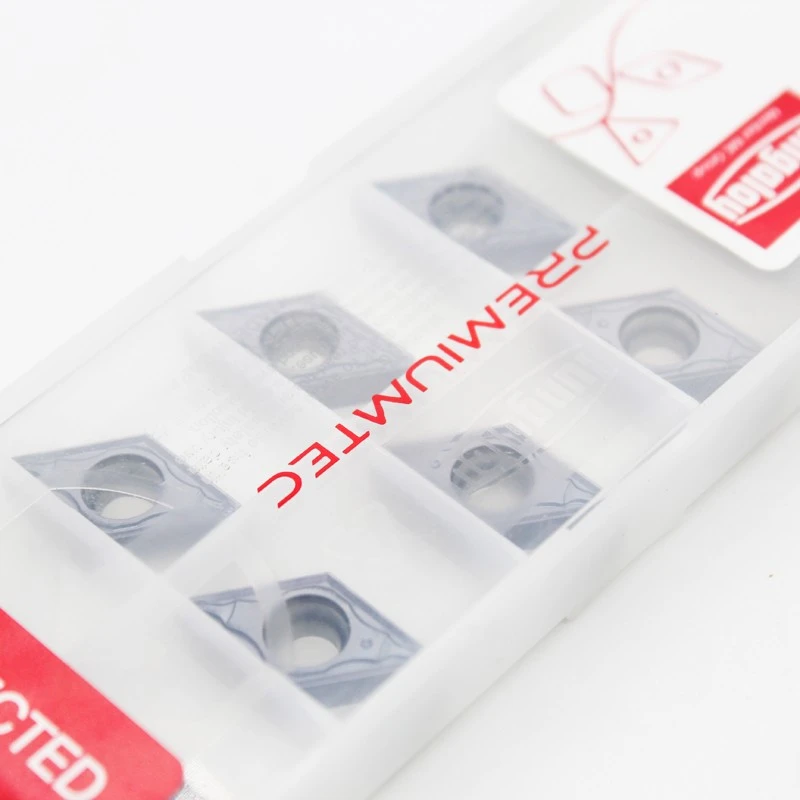
Let's say you're using a Flat Turning Tools for a turning operation on a workpiece with uneven surfaces. The tool might encounter sudden changes in the cutting force, and if the PCD insert isn't properly supported, it can crack. This not only ruins the tool but can also damage the workpiece and disrupt the machining process. Machinists need to be extra careful when using PCD tools in such conditions and may need to adjust their cutting parameters or use different tool geometries to minimize the risk of breakage.
Grinding and Re - sharpening
Sharpening PCD tools is a specialized process. Because of the hardness of PCD, it can't be sharpened using conventional grinding wheels. Specialized diamond grinding wheels are required, and the grinding process needs to be carefully controlled to avoid damaging the PCD insert.
This means that re - sharpening PCD tools is more expensive and time - consuming compared to traditional tools. You can't just take a PCD tool to any local tool grinding shop. You need to find a service provider with the right equipment and expertise. And if you're in a hurry to get your tool back into production, the turnaround time for re - sharpening can be a headache.
Limited Tool Geometries
Compared to traditional tooling options, the range of available tool geometries for PCD tools is somewhat limited. Tool manufacturers have been working on expanding the options, but there are still fewer choices when it comes to complex tool shapes.
For some advanced machining operations, such as those requiring intricate contours or multi - axis machining, you might find that the available PCD tool geometries don't quite meet your needs. This can force you to either compromise on the machining process or look for alternative tooling solutions. For instance, if you need a very specific Boring and Milling Tools geometry for a particular project, you might not find an exact match in the PCD tool catalog.

Application - Specific Limitations
In some specialized applications, PCD tools may not be the best choice. For example, in micro - machining, where extremely small features need to be machined with high precision, the relatively large grain size of PCD can be a drawback. The grain size can limit the achievable surface finish and the ability to machine very small details.
Also, in high - speed machining of materials with high thermal conductivity, the heat dissipation properties of PCD tools may not be ideal. The high heat generated during the cutting process can cause the tool to overheat, leading to premature tool wear and reduced performance.
Overcoming the Limitations
Despite these limitations, PCD tools still have a lot of advantages, and there are ways to work around these issues. For the cost factor, you can look at long - term cost savings by considering the longer tool life and higher productivity that PCD tools can offer. You can also explore financing options or leasing programs to reduce the upfront investment.
To deal with material compatibility issues, you can use PCD tools only on the materials they're best suited for and use alternative tooling for ferrous materials. When it comes to brittleness, proper tool selection, cutting parameter optimization, and toolholding can help minimize the risk of breakage.
For the grinding and re - sharpening problem, you can build a relationship with a reliable PCD tool re - sharpening service provider. And to address the limited tool geometries, you can work with tool manufacturers to see if they can custom - design a PCD tool for your specific application.
Conclusion
So, are there limitations to PCD tools? Absolutely. But these limitations don't mean that PCD tools aren't worth considering. They're still a great option for many machining applications, especially when it comes to non - ferrous materials. As a PCD tool supplier, I understand that every customer's needs are different. We're here to help you find the right tooling solutions that balance the advantages and limitations of PCD tools.
If you're in the market for PCD tools or have any questions about how to overcome the limitations we've discussed, don't hesitate to reach out. We can have a chat about your specific machining requirements and see how we can work together to get the best results. Let's start a conversation about your next project and find the perfect PCD tooling solution for you.
References
- "Modern Machining Technology" - A comprehensive textbook on machining processes and tooling.
- Industry reports on PCD tool manufacturing and applications.
- Technical papers from leading tooling manufacturers on the performance and limitations of PCD tools.